

The Battle for Industrial Automation Signal Standards: How 4-20mA Became the Gold Standard?
2026-01-30 16:06The Battle for Industrial Automation Signal Standards: How 4-20mA Became the Gold Standard?
Auto Sewage Flow Meter
In the field of industrial automation, the unification of signal standards is of vital importance. It directly affects whether the entire industrial production system can operate efficiently and stably. In the early development of industrial automation, the issue of signal standards for instruments and meters was like a thorny problem, seriously restricting the further development of the industry.
In the early days, there was no unified signal standard for instruments and meters in the field of industrial automation. This was just like a city without traffic rules, where vehicles drove randomly, causing chaos. The signal standards of instruments and meters produced by different manufacturers varied greatly.
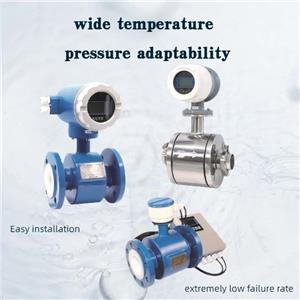
This directly led to the design of many downstream devices becoming extremely complex. Take the design of displays as an example. Due to the need to adapt to various different signal standards, engineers have to spend a lot of time and energy adjusting circuits and optimizing programs. Not only that, but the installation and maintenance costs of the equipment have also increased significantly. Imagine that maintenance personnel need to master the signal standards and debugging methods of multiple different devices, which is undoubtedly a huge challenge. Moreover, compatibility issues between different signal standards often result in devices being unable to communicate normally, thereby affecting the smooth progress of the entire production process.
Facing this problem, many manufacturers have proposed their own solutions. Among the numerous suggestions, the focus is mainly on electrical signals. Various electrical signal standards have been proposed, and the competition is very fierce. Some manufacturers believe that a certain specific range of electrical signals is more suitable for the needs of industrial automation, while others insist that their own solutions are more advantageous. This diverse situation, although promoting technological innovation to a certain extent, has also brought more chaos to the industry. Everyone is waiting for a widely recognized standard to emerge.
After a long period of accumulation and market testing, two widely accepted signal standards have finally emerged. One is the pneumatic signal standard, which is set at 20 - 100 kPa.
Pneumatic signals have unique advantages in some specific industrial scenarios. For instance, in flammable and explosive environments, pneumatic signals are safer and more reliable. Another aspect is the electric signal standard, where 4 - 20mA has become the undisputed gold standard.
The 4-20mA standard has stood out mainly due to its numerous advantages. Firstly, it has excellent anti-interference capability. In industrial production sites, there are various electromagnetic interferences. If the signal is easily disturbed, it will lead to an increase in measurement and control errors, affecting production quality. However, the 4-20mA signal can remain relatively stable in a complex electromagnetic environment, ensuring the accurate transmission of data.
Secondly, it has a relatively long transmission distance. In large industrial enterprises, the distance between devices may be quite far, and the signal is prone to attenuation during transmission. The strength and characteristics of the 4 - 20mA signal enable it to maintain good performance over long distances. Additionally, this standard can also achieve fault diagnosis of the signal. When the signal current is 0mA, it is likely that there is a fault in the line, which is convenient for maintenance personnel to discover and solve problems in a timely manner.
Although with the continuous development of technology, industrial automation is gradually transitioning towards digitalization, and digital signals have shown significant advantages in many aspects, analog signal transmitters are still widely used. This fully demonstrates the strong vitality of the 4 - 20mA standard. Analog signal transmitters have the advantages of low cost, high reliability, and mature technology. In some industrial scenarios where cost is a concern and the requirement for signal accuracy is not particularly high, analog signal transmitters remain the preferred choice. Moreover, many existing industrial devices are designed based on the 4 - 20mA standard. If all were to be replaced with digital devices, not only would the cost be huge, but there would also be numerous issues such as technical transformation and personnel training.
The unification of instrument signal systems in industrial automation is an inevitable requirement for the development of the industry. As an electric signal standard, 4-20mA has stood out in the fierce competition and still plays an important role in current industrial production, especially in the signal transmission of magnetic type flow meter. With its strong anti-interference ability, it ensures the accuracy and stability of data. Whether in traditional industrial sites or intelligent transformation scenarios, the compatibility of inline electromagnetic flow meter with the 4-20mA signal system makes them the preferred equipment for fluid measurement. In multi-device linked control systems, Sea Water Flow Meter, relying on this standard signal, achieve efficient collaboration with other instruments. With the continuous advancement of technology, 4-20mA signals may complement digital signals, which will further enhance the measurement accuracy and intelligence level of Waste Water Flow Meter, and help them better serve industrial production.