

What is RS-485 Signal Voltage? A Comprehensive Analysis of Principles, Ranges, and Applications
2026-03-16 14:55What is RS-485 Signal Voltage? A Comprehensive Analysis of Principles, Ranges, and Applications
RS-485 is a widely used communication standard, applied in industrial automation, control systems, and long-distance data transmission. RS-485 is renowned for its robustness and noise immunity. It employs differential signaling to ensure reliable communication even in environments with significant electrical noise.
This article delves into the characteristics of signal voltage, input/output requirements, and the factors influencing the long-distance performance of RS-485. OTI Instruments takes you through the core standard of industrial communication in one article.
one
gauge pressure transmitter-Voltage Levels in RS-485 Communication
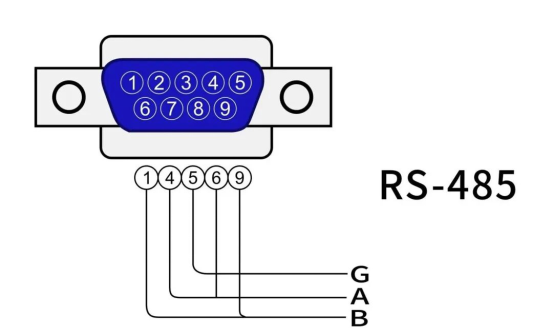
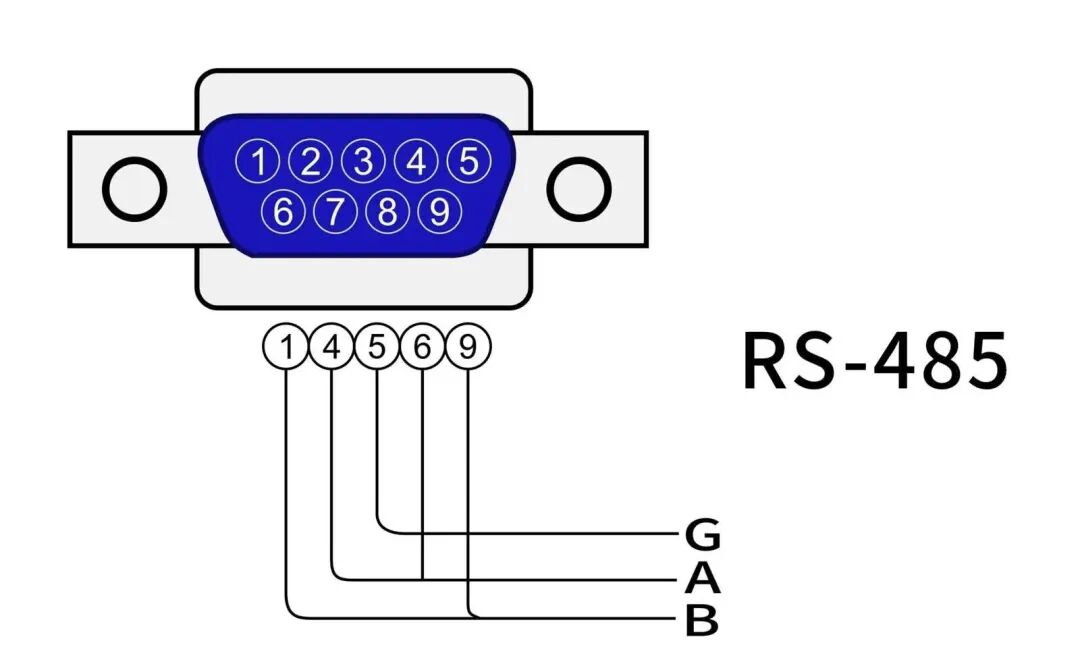
RS-485 uses differential signals to transmit data, which means that the data signal is transmitted in the form of the difference between two wires, A and B. This method ensures that any noise equally affecting the transmission lines will cancel each other out, thereby enhancing the noise immunity.
Logic "1" (marked state):
The voltage of line A is +1.5V to +5V higher than that of line B. For example, if A = 3V and B = 1V, the difference is +2V.
Logic "0" (space state):
The voltage of line A is 1.5V to 5V lower than that of line B. For example, if A = 1V and B = 3V, the difference is -2V.
In an RS-485 system, the absolute voltage level of each wire may vary, but what matters is the difference between the two wires (A – B).
two
capacitance type pressure transmitter-The input voltage range of RS-485 devices
RS-485 devices are designed to operate within a wide range of input voltages to ensure reliability under various conditions.
Input voltage range
Each line can accept voltages ranging from -7V to +12V. This range helps the system tolerate voltage spikes or common-mode noise that may occur in industrial environments.
Common-mode voltage handling capability
RS-485 devices are designed to handle a maximum common-mode voltage of ±7V (the average voltage of the two lines relative to ground) without generating communication errors.
Three
smart pressure transmitter -Termination Resistance and Signal Integrity
To maintain signal integrity over long cables, termination resistors are used at both ends of the RS-485 bus. These resistors match the characteristic impedance of the transmission line (typically 120 ohms). Proper termination matching ensures:
Minimize signal reflection: Prevent signal echoes from causing communication distortion.
Stabilize voltage levels: Help maintain a consistent differential voltage on the line.
If a terminal resistor is not used, the signal may reflect at the end of the cable, causing communication errors, especially at higher data rates.
Four
pressure transmitter HART-Considerations of Cable Length and Data Rate
RS-485 can support long-distance data transmission with relatively small signal attenuation, but there is a trade-off between cable length and data rate.
Maximum distance: At lower data rates (such as 9600 baud), RS-485 supports distances up to 1200 meters (4000 feet).
However, as the data rate increases, the maximum cable length will decrease. For example:
At 100 kbps, the maximum distance is approximately 400 meters. At 1 Mbps, it may drop to 100 meters.
The selection of cable quality (twisted pair, shielded) also plays a significant role in maintaining signal quality over long distances.
Five
EX pressure transmitter-Noise Resistance and Differential Signals
One of the advantages of RS-485 is its differential signal method. Lines A and B transmit complementary signals, so any noise that equally affects both lines will be cancelled out when the voltage difference is calculated at the receiving end.
Anti-electromagnetic interference (EMI):
The RS-485 network has strong resistance to EMI, making it suitable for harsh industrial environments.
Ground loop:
Differential signals reduce the risk of communication problems caused by differences in ground potential between devices.
Six
Pressure Transmitter-RS-485 Multi-device Communication
Another advantage of RS-485 is its support for multi-point communication. A single RS-485 bus can connect up to 32 devices (transceivers) without the use of repeaters. More advanced RS-485 networks can further expand this limit by using repeaters or drivers with lower impedance.
Two-line mode
A pair of twisted wires simultaneously carries data and clock signals, making it a half-duplex system.
Four-wire mode
One pair is used for data transmission and the other for reception, achieving full-duplex communication.
Seven
Pressure Transmitter-Applications of RS-485
Due to its robustness, RS-485 is often used in the following fields:
Industrial Automation: Connecting PLCs (Programmable Logic Controllers), sensors, and actuators.
Building Management System (BMS): Used for HVAC control, lighting systems, and fire alarms.
Serial communication protocol: RS-485 is often used as the physical layer for protocols such as Modbus, Profibus, and BACnet.
Aute pressure transmitters are perfectly compatible with all the above scenarios, providing stable RS-485 signal output.
Remote meter reading: Electricity meters and water meters often use RS-485 for data transmission.
Eight Conclusion
RS-485 is a reliable and noise-resistant communication standard, highly suitable for industrial and commercial applications. Its differential signal, wide input voltage range, and support for long-distance and multi-device communication make it an ideal choice in environments with significant electrical noise or long transmission paths. By understanding the signal voltage characteristics and best practices for terminal matching and wiring, users can design RS-485 networks that maintain performance and reliability under various conditions. Choose Auto Instrument RS-485 pressure transmitters for higher accuracy, more stable signals, and more reliable communication, ensuring your industrial pressure monitoring is well protected.