


Complete Interpretation of Explosion-Proof Markings: Professional Definitions of ia, db, IIC, T6, and Gb
2026-08-12 14:55Complete Interpretation of Explosion-Proof Markings:
Professional Definitions of ia, db, IIC, T6, and Gb
Preface
Pressure transmitters commonly use two types of explosion‑proof design: intrinsically safe ia and flameproof db. This is where many procurement and engineering teams run into confusion, especially during instrument selection and safety inspections. If you are sourcing remote‑sealed transmitter, capacitive pressure transmitter, gauge pressure transmitter, smart pressure transmitter and high‑temperature pressure transmitter, do not rely on the word “explosion‑proof” alone. The full Ex code printed on the nameplate explains how the device prevents ignition. In principle, most explosion‑proof instruments fall into two categories: intrinsic safety through energy‑limited circuits, and flameproof protection through enclosures that contain internal explosions and stop flame spread.
1. Intrinsically Safe Structure Ex i (ia / ib / ic)
The letter “i” on the nameplate refers to intrinsic safety. This design limits voltage, current, inductance and capacitance in the signal loop, so that electric sparks are not strong enough to ignite flammable gases or vapors. It is widely used in remote‑sealed transmitter, capacitive pressure transmitter and many other field measuring instruments.
Ex ia: The highest intrinsic‑safety level, paired with Ga equipment protection level. Suitable for Zone 0, where explosive gas may be present continuously.
Ex ib: A standard intrinsic‑safety grade with Gb protection level. Suitable for Zone 1, where hazardous gas appears occasionally.
Ex ic: A basic intrinsic‑safety classification with Gc rating. Only permitted in Zone 2, where combustible gas exposure is short‑term and rare.
Intrinsic safety does not depend on thick, heavy housings. Instead, it works by keeping circuit parameters within safe limits. This makes it a common choice for low‑power signal equipment, such as smart pressure transmitter. One important point: intrinsic safety cannot be evaluated by checking a single instrument. The entire signal loop must be reviewed, including field transmitters, safety barriers, and cable inductance and capacitance values. Judging safety only by one nameplate may leave hidden risks on site.
2. Flameproof Structure Ex db
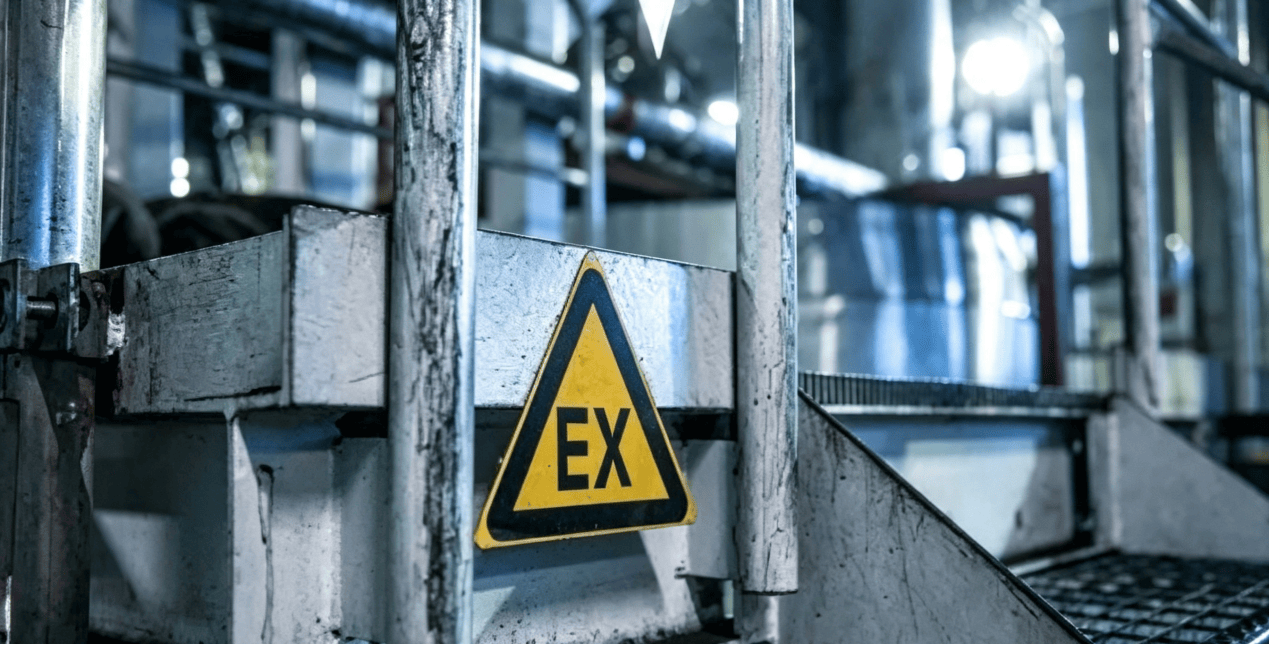
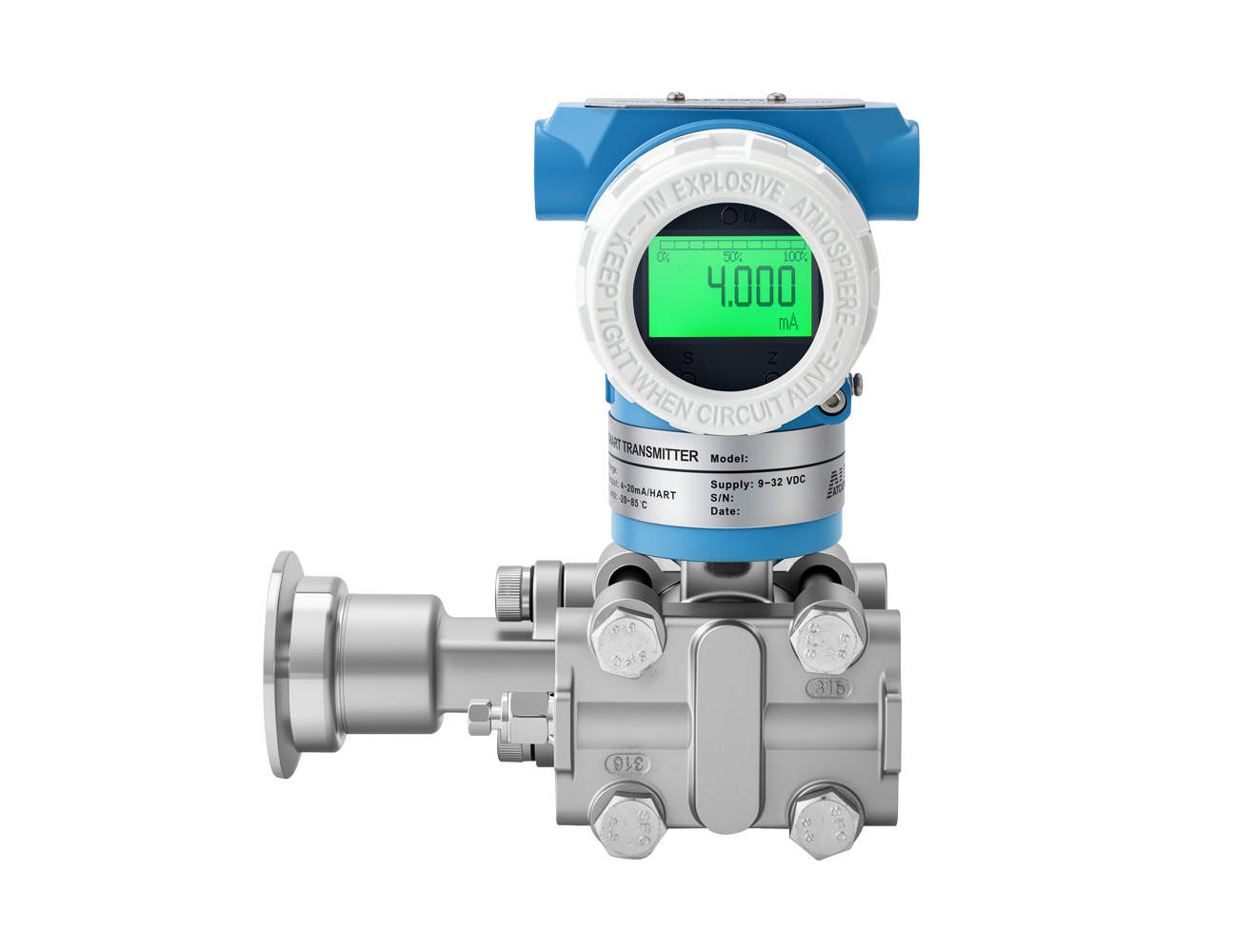
Ex db was previously referenced as Ex d. This design uses strong, sealed enclosures that can withstand internal explosions. Flame paths are carefully controlled through precision‑machined joints and gaps, which cool down flames and prevent them from reaching the outside atmosphere. A typical Ex db marking may read Ex db IIC T6 Gb, and its meaning can be broken down as follows:
Ex: General identification for industrial explosion‑protected equipment.
db: Flameproof enclosure type, corresponding to Gb equipment protection grade.
IIC: High‑risk gas group, often required for transmitters installed in chemical plants.
T6: Maximum allowable surface temperature classification.
Gb: Protection rating suitable for Zone 1 hazardous locations.
Ex db works on a completely different principle from intrinsically‑safe ia. It is widely used for remote‑sealed transmitter and smart pressure transmitter installed in Zone 1 hazardous areas.
3. Core Differences Between Intrinsic Safety (ia) and Flameproof (db)
Protection principle: ia works by limiting electrical energy in the circuit. db contains internal explosions and prevents flame escape through pressure‑resistant housings.
Applicable equipment: ia is suitable for low‑power measuring instruments, such as remote‑sealed transmitter and capacitive pressure transmitter. db is used for high‑power equipment, including gauge pressure transmitter, electric motors and distribution cabinets.
4. Temperature Classification T1‑T6
T‑class numbers indicate the maximum allowable surface temperature of the equipment. A higher T number means a lower permitted surface temperature and a wider safety margin:
T1 ≤450°C, T2 ≤300°C, T3 ≤200°C, T4 ≤135°C, T5 ≤100°C, T6 ≤85°C.
One common misunderstanding among site personnel is that T6 represents a higher explosion‑proof rating. In reality, T6 only means stricter surface temperature control. If the actual ambient temperature exceeds the operating range marked on the transmitter nameplate, the T6 classification is no longer valid. In that case, a high‑temperature pressure transmitter must be used. Always confirm that the equipment’s maximum surface temperature remains below the auto‑ignition temperature of the flammable materials present on site.
5. High‑risk Gas Group IIC vs Combustible Dust Group IIIC
Group II applies to locations with explosive industrial gas. The risk ranking is IIA<IIB<IIC. An IIC‑rated gauge pressure transmitter can be used in IIB and IIA gas environments. However, instruments rated IIB or IIA must not be deployed in high‑hazard IIC gas atmospheres.
Group III applies to workshops where combustible dust may be present. IIIC is the highest protection level for conductive dust. Instruments marked IIIA or IIIB must not be used in workshops handling aluminum, magnesium or other conductive dust. Fine conductive dust can enter terminal gaps and cause local overheating or leakage currents.
When selecting remote‑sealed transmitter for dusty production areas, always check both the enclosure IP rating and the sealing structure. Some transmitters carry dual certifications for gas and dust hazards, which means two complete sets of Ex markings will appear on the nameplate. Operation under media conditions not specified on the nameplate is not allowed.
6. EPL Equipment Protection Level (Gas: Ga/Gb/Gc; Dust: Da/Db/Dc)
EPL stands for Equipment Protection Level, and it corresponds directly to standard hazardous‑zone classifications.
For gas environments
Ga = Zone 0, Gb = Zone 1, Gc = Zone 2
Practical example: Ex ia IIC T6 Ga (flange‑mounted transmitter for Zone 0); Ex db IIC T6 Gb (remote‑sealed transmitter installed in Zone 1)
For dust environments
Da = Zone 20, Db = Zone 21, Dc = Zone 22
Practical example: Ex tb IIIC T85℃ Db (special‑purpose gauge pressure transmitter for Zone 21 dust hazard)
Site operators should not interchange capacitive pressure transmitter or smart pressure transmitter across different hazardous zone levels.
7. Standard Workflow to Decode Explosion‑Proof Nameplates
When purchasing remote‑sealed transmitter and gauge pressure transmitter, always interpret the full marking set in a fixed order. Do not judge safety based on one single symbol.
Identify the explosion‑proof protection mode (ia / ib / ic / db / tb) to distinguish between intrinsically‑safe and flameproof transmitters.
Check the medium category: II for gas environments, III for dust environments.
Confirm the medium risk group: IIA/IIB/IIC for gas, or IIIA/IIIB/IIIC for dust. For gas processing lines, IIC‑certified flange transmitters are generally preferred.
A single symbol on the nameplate does not prove that a remote‑sealed transmitter or gauge pressure transmitter meets on‑site safety requirements. The complete set of Ex markings must be reviewed together.
Summary
Intrinsically‑safe ia and flameproof db are not superior or inferior to each other. They are designed for completely different working conditions. Intrinsically‑safe ia instruments are suitable for low‑power measuring devices in Zone 0 and Zone 2, and unauthorized modification to internal signal circuits is not allowed. Flameproof db equipment relies on heavy sealed housings to contain explosion flames, making it suitable for high‑power devices in Zone 1. After maintenance, all flame‑proof structural integrity must be fully restored.
If plant managers and procurement teams want to select the right instruments and pass safety inspections smoothly, they need to understand the full Ex marking system, including ia, db, IIC, T6 and Gb. This applies to remote‑sealed transmitter, capacitive pressure transmitter, gauge pressure transmitter, smart pressure transmitter and high‑temperature pressure transmitter. Simply calling an instrument an “explosion‑proof transmitter” is not enough to meet official safety standards in chemical and oil‑gas hazardous production areas.