


Auto Instrument | Explosion-Proof Pressure Transmitter Selection Guide: Distinction Between IIA, IIB, IIC and IIIA, IIIB, IIIC
2026-10-26 10:05Auto Instrument | Explosion-Proof Pressure Transmitter Selection Guide: Distinction Between IIA, IIB, IIC and IIIA, IIIB, IIIC
Introduction
Combined with GB/T 3836 series national standards, the technical team of Auto Instrument interprets the true meaning of IIA, IIB, IIC, IIIA, IIIB and IIIC marked on explosion-proof nameplates. This guide helps engineers in chemical and oil & gas projects across Southeast Asia correctly select explosion-proof pressure transmitters, and avoid selection errors in hazardous environments with explosive gas and combustible dust.
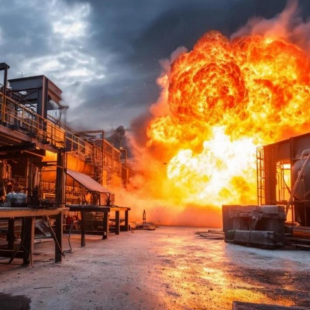
Markings such as Ex db IIC T6 Gb and Ex tb IIIC T80℃ Db are commonly seen on the nameplates of explosion-proof instruments and electrical equipment. Many engineers simply take IIC or IIIC as “high explosion-proof grade”. This understanding is inaccurate. Although these letter codes look similar, they correspond to completely different hazardous media.
1. IIA, IIB, IIC: Classification for Explosive Gas Atmospheres
For industrial pressure transmitters and other explosion-proof instruments used in petroleum, chemical and natural gas facilities, most fall into Group II equipment, classified into IIA, IIB and IIC according to explosive gas properties.
Different gases vary in ignition characteristics and flame propagation capacity. The classification is based on MESG (Maximum Experimental Safe Gap) and MICR (Minimum Igniting Current Ratio). You do not need to memorize these parameters for site selection. The key rule: the easier the gas is to ignite and the easier the flame passes through narrow gaps, the stricter the structural and test requirements for the equipment. GB/T 3836.11-2022 provides clear test basis for gas and vapour classification. IIA/IIB/IIC are not arbitrary simplified grades.
Order of equipment requirements: IIC > IIB > IIA, which means the explosion-proof requirements increase step by step. It does not mean the explosion power of gases increases in this sequence. When conditions are met, IIC equipment is compatible with IIC, IIB and IIA gas conditions; IIB equipment applies to IIB and IIA; IIA equipment is only suitable for IIA. As specified in Clause 5.2.3 of GB 50058-2014, the group of explosion-proof equipment shall not be lower than the group of the on-site explosive mixture. IIB working conditions can adopt IIB or IIC equipment; IIC working conditions must use IIC equipment. This compatibility logic only applies within the gas classification system.
Many Southeast Asian projects adopt explosion-proof instruments with HART and 4-20mA output for gas pressure measurement. Always verify the gas group during selection for such gas pressure transmitters.
2. IIIA, IIIB, IIIC: Classification for Combustible Dust Atmospheres
Group III equipment is designed for dust explosion protection, divided into IIIA, IIIB and IIIC based on combustible materials:
· IIIA: Combustible flyings and fibres
· IIIB: Non-conductive dust, e.g. flour dust, plastic dust
· IIIC: Conductive dust, e.g. combustible metal dust
Order of equipment requirements: IIIC > IIIB > IIIA. When conductive dust enters the equipment, apart from explosion risk, it may cause creepage, leakage and short circuit. Therefore, the requirements for enclosure sealing and insulation are the most stringent. IIIC is merely a dust group, not a direct indicator of dust explosion severity. The overall hazard shall be evaluated combining dust particle size, ignition energy and concentration. Compatibility rule: IIIC equipment covers IIIC, IIIB and IIIA dust environments; IIIB covers IIIB and IIIA; IIIA only applies to IIIA environments.
3. Key Misconception: IIC ≠ IIIC
IIC applies to explosive gas atmospheres; IIIC applies to combustible dust atmospheres. There is no hierarchical comparison between them, and they cannot replace each other. If the medium is flammable gas or vapour, refer to IIA/IIB/IIC. If the medium is combustible dust, refer to IIIA/IIIB/IIIC.
4. Selection Cannot Rely Only on IIC or IIIC
Example 1: Ex db IIC T6 Gb Ex = General explosion-proof mark; db = Flameproof type; IIC = Gas group; T6 = Temperature class; Gb = Equipment protection level for gas atmosphere.
Example 2: Ex tb IIIC T80℃ Db tb = Dust enclosure protection type; IIIC = Conductive dust group; T80℃ = Maximum surface temperature of equipment; Db = Equipment protection level for dust atmosphere.
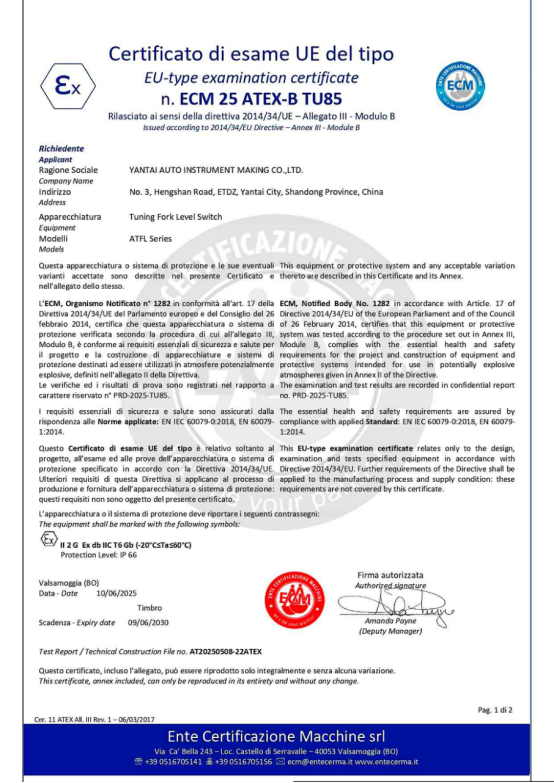
IIC and IIIC are only part of the explosion-proof marking. Before commissioning, you must verify the explosion-proof type, EPL (Equipment Protection Level) and temperature class to match hazardous area specifications. GB 3836.15-2024 specifies the requirements for design, selection and installation of electrical installations in explosive atmospheres. Purchase decisions shall not be made based solely on these group codes. As a professional pressure transmitter manufacturer, Auto Instrument reminds you to fully verify the complete set of explosion-proof parameters.
5. Full Verification Procedure for Selection
1. Identify the medium: flammable gas/vapour or combustible dust
2. Confirm hazardous zone: Zone 0 / 1 / 2 for gas; Zone 20 / 21 / 22 for dust
3. Match the corresponding group: IIA/IIB/IIC for gas; IIIA/IIIB/IIIC for dust
4. Check EPL: Ga/Gb/Gc for gas; Da/Db/Dc for dust
5. Check temperature: T1-T6 for gas; allowable surface temperature for dust (e.g. T80℃, T100℃)
6. Verify explosion-proof certificate: model, ambient temperature, installation restrictions and special operating conditions
6. Clarification of Common Misunderstandings
1. “IIC means high explosion-proof grade”: Incorrect. IIC is only a gas group, not a full representation of the equipment’s explosion-proof performance.
2. “IIIC is higher grade than IIC”: Incorrect. They belong to two separate systems for dust and gas respectively and cannot be compared.
3. “It is always safe to upgrade from IIB to IIC for IIB sites”: Gas group allows downward compatibility, but explosion-proof type, EPL, temperature and certificate must also match.
4. “IIIB is sufficient for dust applications”: If conductive dust exists, IIIC-rated equipment is mandatory.
7. Summary
For gas environments: IIA → IIB → IIC, moving right means higher explosion-proof requirements for equipment. For dust environments: IIIA → IIIB → IIIC, moving right means higher explosion-proof requirements for equipment.
Selection sequence: Medium → Hazardous Zone → Group → Explosion-proof Type → EPL → Temperature Condition → Explosion-proof Certificate. IIA, IIB, IIC, IIIA, IIIB, IIIC are just fragments on the nameplate. The instrument can only be put into service after the full explosion-proof marking matches all site working conditions.
Auto Instrument supplies a wide range of explosion-proof pressure transmitters, covering gas groups IIA/IIB/IIC and dust groups IIIA/IIIB/IIIC. Complete explosion-proof certificates are provided, suitable for hazardous measurement scenarios in chemical, oil & gas and powder processing industries across Southeast Asia.