


Auto Instrument | Identification of 316L Stainless Steel: Steel Stamp Does Not Equal Authentic Material
2026-10-26 09:53Auto Instrument | Identification of 316L Stainless Steel: Steel Stamp Does Not Equal Authentic Material
Introduction
Combined with real material acceptance cases from chemical project sites, the technical team of Auto Instrument analyzes misunderstandings in 316L stainless steel identification. It corrects the misconception that “a steel stamp, material certificate, and alloy elements detected by spectrometer mean the material is 316L”. This guidance helps procurement and engineering personnel verify the material of wetted parts for pipe fittings, valves and instruments, and avoid corrosion failure risks caused by inconsistent materials.
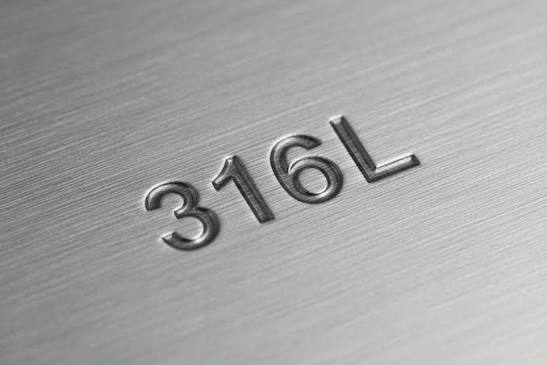
A batch of 316L stainless steel pipe fittings arrives with clear steel stamps and complete material certificates. Handheld spectrometer test also shows 316L. Can we accept them directly? Material disputes of this kind have indeed occurred on engineering sites. The pipe fittings are marked 316L, with chromium, nickel and molybdenum meeting the requirements, yet re-testing shows carbon content exceeds the limit specified for 316L. To understand this issue, we first need to distinguish the core chemical composition differences among 304, 316 and 316L.
1. Composition Differences Between 304, 316 and 316L
All three are austenitic stainless steels and can hardly be distinguished by appearance. In accordance with ASTM A240/A240M: The key difference between 304 and 316 is the molybdenum element. Both 316 and 316L contain molybdenum, which improves the resistance to chloride pitting corrosion and crevice corrosion. 316 and 316L share nearly the same main alloy element range, and their core difference lies in carbon content:
316: Maximum carbon content 0.08%
316L: Maximum carbon content 0.03% The letter “L” in the grade stands for Low-Carbon. Lower carbon content reduces the susceptibility to intergranular corrosion in the heat-affected zone after welding. Note: Ordinary 316 may also have carbon content below 0.03% with other elements qualified, which chemically meets the specifications of both 316 and 316L. However, whether it can be delivered as 316L still needs to be checked against the material certificate, product standard and purchasing technical specification.
For level measurement in corrosive working conditions, 316L stainless steel is widely adopted for wetted flanges and diaphragms of many flange level transmitters and diaphragm sealed level transmitters. As a level transmitter manufacturer, we are frequently asked to confirm material reports during project communication. Especially for remote sealed level transmitters with capillary structure and tank-mounted level transmitters for storage tank measurement, the medium is highly corrosive, bringing prominent material risks. Even for supporting differential pressure transmitters, the material of wetted parts cannot be judged merely by the nameplate steel stamp.
2. Can Handheld Spectrometers Be Used Directly for 316L Acceptance?
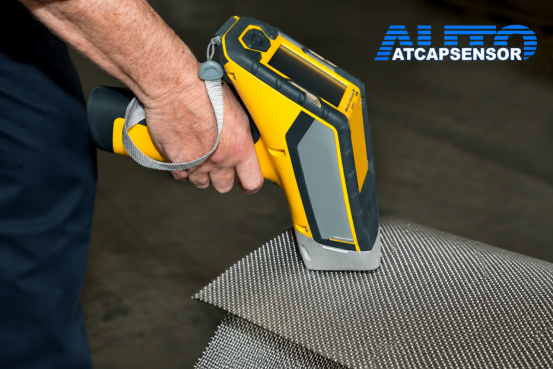
Handheld X-ray Fluorescence Spectrometer (XRF) is widely used for on-site material verification. It can quickly detect chromium, nickel and molybdenum to distinguish mixed use of 304 and 316 series.
Example test data of a fitting marked 316L: Cr:17.1%, Ni:11.8%, Mo:2.2%. Chromium, nickel and molybdenum fall within the range of 316 and 316L. Test data of another fitting: Cr:18.4%, Ni:8.5%, Mo:0.1%, which is closer to 304. The physical part and its source need further verification.
Nevertheless, conventional handheld XRF cannot detect carbon elements. The “316L” judgement given by the device database is only based on matching Cr-Ni-Mo results, without carbon content. Besides, magnet test cannot identify stainless steel grades. Magnetism is affected by cold working, welding and metallographic structure, so it shall not serve as the basis for material judgement.
3. How to Test Carbon Content of 316L
Per ASTM A240/A240M, the maximum carbon content of 316L is 0.03%. Sample test data: Cr:17.0%, Ni:12.0%, Mo:2.3%, C:0.052%. Cr, Ni and Mo are qualified, but carbon content exceeds the limit. This cannot be regarded as 316L, and only satisfies the composition requirement of 316.
Two common methods for carbon content testing:
Spark Optical Emission Spectrometry (Spark OES): Capable of carbon analysis. The test leaves discharge marks on the workpiece surface. For installed valves, pipe fittings and instrument connectors, confirm that surface damage is permitted before testing.
Combustion Infrared Absorption Method: The sample is burned, and carbon content is determined via infrared absorption. ASTM E1019 is a critical laboratory standard for carbon analysis in steel alloys.
For installed pipelines where sampling is difficult, priority shall be given to checking the carbon content on the material certificate and ensuring the heat number matches the physical part. If re-test is required, follow the project technical documents.
4. Key Points for On-site Acceptance of 316L
Upon material arrival, cross-check the physical steel stamp and material certificate. Focus on the grade, applicable standard, heat number, complete chemical composition and inspection results on the material certificate. For example, if purchasing ASTM A312 TP316L steel pipe, acceptance shall comply with the corresponding product standard and purchasing technical specification.
Physical inspection highlights: The heat number must be consistent with the material certificate. Steel stamps are easily lost after pipe cutting. Mark transfer must be completed during material requisition, processing and installation to avoid material mixing. For PMI inspection projects, test at specified proportions and points as required by documents. Remove paint, oil and contaminants on the surface before testing. If measured data is inconsistent with the certificate, trace the root cause and re-test if necessary. For pressure-bearing piping and equipment components, mechanical properties, heat treatment status and dimensions shall also be verified.
5. Why Does Corrosion Still Happen Even for Qualified 316L?
On some project sites, corrosion such as pitting and crevice corrosion still occurs even after material verification for instruments. Working conditions shall be comprehensively evaluated. The corrosion resistance of 316L is affected by temperature, chloride concentration, surface condition and local crevice structure. Local corrosion is more likely to occur at positions with liquid accumulation and sediment deposition.
The low-carbon advantage of 316L mainly mitigates intergranular corrosion risk after welding. It does not mean 316L outperforms ordinary 316 in corrosion resistance for all working conditions. If corrosion failure occurs, material composition, process medium conditions, welding quality and surface finishing shall be checked together.
6. Summary
For on-site acceptance of 316L, steel stamp, material certificate and test data shall verify each other. Handheld XRF is suitable for checking alloy elements including chromium, nickel and molybdenum. To distinguish 316 from 316L, valid test evidence of carbon content is mandatory. If 316L is specified on drawings, acceptance shall be carried out strictly in accordance with 316L product standards and purchasing technical specifications. Formal technical approval is required if grade substitution is needed. Markings on the workpiece are only superficial. Qualified chemical composition and warranty documents are the fundamental criteria for material acceptance.
As a level transmitter manufacturer, Auto Instrument supplies differential pressure transmitters, flange level transmitters, diaphragm sealed level transmitters, remote sealed level transmitters and tank-mounted level transmitters. We can provide complete material certificates for wetted parts and support on-site re-inspection by customers, adapting to various corrosive process measurement scenarios.