


Auto Instrument | Analysis of Safety Risks for Confined Space Operation Attendance in Hazardous Chemical Sites
2026-10-26 10:35Auto Instrument |
Analysis of Safety Risks for Confined Space Operation Attendance in Hazardous Chemical Sites
Introduction
Combined with GB 30871-2022 Safety Specification for Special Operations of Hazardous Chemical Enterprises, the technical team of Auto Instrument interprets various safety risks during the attendance phase of confined space operations, and corrects the misconception that “a large space means it is safe”. This guide helps management personnel of chemical and oil & gas projects identify confined spaces, implement operation control and on-site attendance, and prevent safety accidents such as poisoning and suffocation.
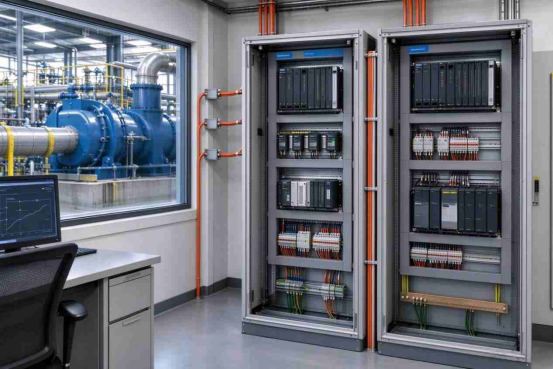
The larger the confined space, the easier its risks are underestimated. Personnel tend to stay alert for wells, tanks and troughs. However, for large pools, underground equipment rooms, pipe trenches, silos and flues with wide space and large openings, on-site staff are prone to relaxing risk judgment. When identifying a confined space, priority shall be given to personnel access mode, air circulation conditions, original medium and connected process pipelines. The space size is only a secondary reference. Any deviation in confined space identification will lead to loopholes in subsequent isolation, ventilation, testing, attendance and emergency rescue preparation. Therefore, safety control of confined space operations must start with risk identification.
1. What Is a Confined Space?
The definition of confined space specified in the Safety Regulations for Confined Space Operations in Industrial and Trade Enterprises covers core features: enclosed or partially enclosed, accessible for personnel to carry out operations, not a regular workplace, prone to accumulation of toxic, harmful and flammable-explosive substances or abnormal oxygen content.
The standard GB 30871-2022 adopts the term “confined space”, which is defined as enclosed or semi-enclosed facilities and places with restricted access and poor ventilation, where flammable-explosive substances, toxic and hazardous substances or oxygen deficiency risks may exist.
Sewage manholes, storage tanks, large pools, underground structures, silos, flues and equipment inner cavities shall all be identified according to actual working conditions. Essentially, a confined space is a risky environment rather than merely a physical form, which lays the foundation for all subsequent safety measures. Confined spaces such as storage tanks and reaction kettles at chemical sites are often equipped with industrial pressure transmitters to monitor tank conditions. Some HART pressure transmitters output standard 4-20mA signals for gas pressure monitoring. As a professional pressure transmitter manufacturer, Auto Instrument reminds you: instrument monitoring data can only serve as auxiliary reference and cannot replace dedicated gas detection for confined space operations.
2. No Odor Does Not Mean No Danger
It should be noted that the environmental condition detected before confined space entry only represents the moment of testing. The internal environment will keep changing after personnel enter. Accumulated gas can be released when sludge is disturbed; welding and cutting will alter air composition; cleaning agents and coatings keep volatilizing; materials may intrude accidentally from connected pipelines; accidental startup of equipment may cause mechanical injury. All these will bring new hazards.
Confined space risks cannot be judged simply by “whether there is toxic gas”. Comprehensive verification is required: whether oxygen content meets the standard, whether flammable and toxic gases are within safe thresholds, whether pipeline isolation is reliable, whether equipment energy is locked, whether there is risk of material intrusion, and whether evacuation passages are unobstructed.
The core of confined space safety management is to ensure the environment remains under control from personnel entry until all personnel exit. Gas detection is only one part of the whole process. Isolation, ventilation, testing, attendance, personal protection and emergency preparation must all be fully implemented.
3. Key Preparations Before Confined Space Entry
Before allowing personnel to enter, do not only check tick boxes on the work permit. Prioritize confirming whether hazard sources have been properly handled. First, sort out internal media: what materials the equipment once stored, whether residual sludge and liquid exist, and whether new gas or heat will be generated during operation. Second, verify external connections: feed pipelines, discharge pipelines, steam, nitrogen, water supply & drainage and linked mechanical equipment may change internal conditions. Reliable isolation measures must be implemented for material and energy pathways. Third, manage the internal operating environment following the principle: ventilate first, then test, and carry out operations afterwards.
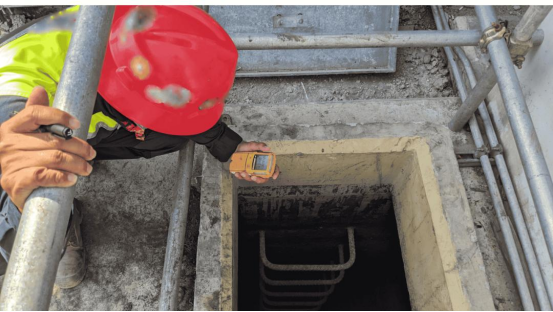
Ventilation improves the internal environment, and testing confirms real-time conditions. Personnel can only enter after passing the test. Meanwhile, work approval, safety briefing, personal protective equipment deployment and standby attendants and emergency gear shall be in place. Most potential hazards should be eliminated before personnel entry.
4. Control Logic During Confined Space Operations
Personnel entry is only the start of the operation. On-site management shall shift from “entry condition confirmation” to “dynamic control throughout the operation”. Four dimensions shall be continuously monitored:
1. Air condition: Keep ventilation equipment running, track changes in oxygen, flammable and toxic gas readings;
2. Equipment status: Ensure isolation measures for valves, pipelines, machinery and electrical energy remain effective throughout the operation;
3. Operator status: Attendants keep track of the number of personnel inside, their locations, work content and evacuation routes, and maintain real-time communication;
4. Changes in work scope: For example, temporary welding added during routine inspection, or temporary chemical dosing during sludge cleaning. Any change in work content means changed risk conditions.
Once gas alarm triggers, operators feel unwell, ventilation is interrupted or material intrusion risk rises, all personnel inside shall evacuate immediately, and all operating conditions shall be re-verified.
The management logic for confined spaces is clear: confirm conditions before entry, and monitor changes during operation. The former decides whether entry is permitted, and the latter decides whether work can continue.
5. Actual Responsibilities of On-site Attendants
Many on-site teams mistakenly regard attendance as simply standing guard at the entrance, while attendants bear far more responsibilities. Attendants must know the number of personnel inside, work content, risk points, evacuation triggers and be familiar with emergency response procedures for abnormal incidents.
When an emergency occurs, the confined space itself remains hazardous. Respiratory protection, communication tools, ventilation equipment, lifting devices and rescue procedures must all be ready before personnel enter. Adequate emergency preparation helps seize the initiative in accident response. Attendants are strictly prohibited from blind rescue without proper protection.
6. Summary
The complete management chain for confined space operations: Identify confined space → Identify all risks → Isolate hazard sources → Ventilate and test → Personnel entry for operation → Full-process attendance and control → Safe evacuation. Any omission in the early stages will weaken the foundation of all subsequent safety work.
On-site managers shall focus on the first three steps: complete accurate confined space identification and define applicable management requirements; fully identify risk points and clarify objects to be isolated and tested; implement hazard source control, so as to create safe prerequisites for personnel entry. Only by fulfilling these three points can we grasp the core of confined space safety management.
Auto Instrument supplies industrial pressure transmitters, HART pressure transmitters, 4-20mA pressure transmitters, gas pressure transmitters and other measurement products. As a professional pressure transmitter manufacturer, our products are used for process parameter monitoring of chemical storage tanks and reaction equipment to assist on-site process risk judgment. They cannot replace dedicated gas detection for confined space operations.