


Common Signals in Automation Control Systems: A Beginner’s Guide
2026-05-22 16:34Common Signals in Automation Control Systems: A Beginner’s Guide
Engineers new to automation often focus on PLC programming, HMIs, and inverter parameters. However, real‑world stability depends most on reliable signals. Unstable data, unresponsive valves, intermittent sensors, and confusing faults often trace back to loose wiring, poor shielding, or incorrect 4-20mA analog signal settings.
Temperature, pressure, flow, and level are transmitted via signals. Pumps, valves, and motors are controlled by signals. Alarms, interlocks, and communications all rely on stable transmission. When signals fail, even perfect programming cannot maintain stable operation. This article introduces the most common industrial signal types used in automation control systems.
1. Analog Measurement Signals
Analog signals change continuously over time and are widely used for temperature, pressure, flow, and level measurement.
Voltage signals (0–10V): Simple but sensitive to interference and voltage drops, suitable only for short distances.
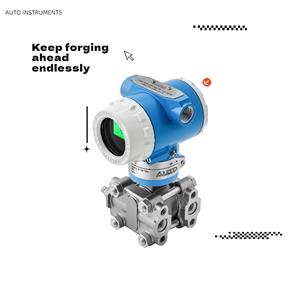
4-20mA analog signal: The most popular standard in field instrument signal transmission. The 4mA “live zero” helps detect wire breakage (0mA indicates fault). It offers strong anti-interference performance and supports long‑distance transmission, widely used in pressure transmitters, level meters, and temperature transmitters.
2. Digital Status Signals
Digital signals have only two states: on/off, run/stop, present/absent. Buttons, pump status, valve feedback, and proximity switches all use digital signals.
In PLC signal processing, digital inputs report field conditions, while digital outputs execute control actions. Many “program errors” are actually faulty digital signals.
3. Pulse Counting Signals
Pulse signals are sequential switching signals used for counting, speed measurement, and positioning. Encoders use pulses to calculate motor speed. PWM (pulse width modulation) controls motors, heaters, and lighting. Pulse signals require good shielding and high‑speed modules.
4. Switch Interlock Signals
Switch signals are discrete signals for safety and interlock applications: limit switches, emergency stops, pressure switches, and level switches. They trigger protection logic such as shutdown on overpressure or door opening.
5. Bus Communication Signals
Bus signals enable data exchange between multiple devices. Common industrial communication protocols include Modbus, Profibus, DeviceNet, and industrial Ethernet such as Profinet and EtherNet/IP. Bus systems reduce wiring, improve scalability, and support rich diagnostics in large automation control systems.
6. Photoelectric Detection Signals
Photoelectric sensors provide non‑contact detection for positioning, counting, and presence detection. They are fast and flexible but sensitive to dust, oil, and reflection.
7. Wireless Monitoring Signals
Wi‑Fi, Bluetooth, LoRa, and NB‑IoT support remote monitoring without wiring. They are widely used in retrofits, remote sites, and low‑frequency data collection but are not recommended for safety interlocks.
8. Signal Conversion and Conditioning
Most field instrument signal transmission requires conditioning: isolation, filtering, amplification, and conversion.
ADC: Converts analog to digital for PLC signal processing.
DAC: Converts digital to analog for valves and drives.
9. Fault Troubleshooting Basics
Analog: Check range, grounding, shielding, interference
Digital: Check contacts, voltage, common terminal
Pulse: Check frequency, cable, response speed
Bus: Check protocol, address, communication status
Photoelectric: Check installation, contamination, reflection
Wireless: Check environment, distance, stability
Conclusion
Signals are the “language” of automation control systems. Understanding industrial signal types, 4-20mA analog signal standards, PLC signal processing, field instrument signal transmission, and industrial communication protocols is essential for stable, reliable, and efficient on-site operation.
Mastering signals is the foundation of professional automation engineering.