


Why does 4–20 mA analog signal transmission still dominate industrial automation?
2026-05-14 11:02Why does 4–20 mA analog signal transmission still dominate industrial automation?
In modern industrial automation, digital communication protocols such as Modbus, Profibus, and HART continue to gain popularity. However, even with rapid technological evolution, the 4–20 mA analog signal remains one of the most reliable and widely adopted methods for transmitting process variables including pressure, temperature, flow, and gas concentration.From gas detection systems to liquid level and temperature monitoring, this classic current loop remains the foundation of industrial measurement and control. Its enduring dominance comes from its stability, simplicity, and robustness, especially in environments where operational safety and reliability are critical.
Excellent Stability and Strong Anti-interference Performance
One of the most prominent advantages of the 4–20 mA signal is its exceptional stability and strong anti-interference performance. Unlike voltage signals such as 0–10 V, which are easily affected by voltage drops, line resistance, and electromagnetic interference (EMI/RFI), the current loop maintains a stable current value throughout the line. As long as the circuit voltage is sufficient to support the loop, the current remains accurate regardless of moderate changes in cable resistance or transmission distance. This feature makes the 4–20 mA analog current loop ideal for long-distance process signal transmission in complex industrial environments.
Linear and Intuitive Process Variable Representation
The 4–20 mA signal provides a clear, linear relationship with the measured physical parameter, making it highly intuitive for engineers and control systems.In standard configuration:
· 4 mA represents the minimum measuring range (0%)
· 20 mA represents the full measuring range (100%)
Values between 4 and 20 mA change proportionally with process conditions, allowing operators and systems to interpret readings quickly and correctly. This linear characteristic simplifies integration with PLCs, DCS, and HMIs without complex decoding or calculation. During maintenance, engineers can directly judge working status: 12 mA indicates a stable mid scale condition, while a sudden drop below 4 mA signals an abnormal state.
Point-to-Point Transmission for Easy Fault Isolation
Each 4–20 mA loop typically corresponds to one field device, forming an independent point-to-point connection between field instruments and the control room. This structural independence improves system safety significantly. If one cable is damaged or one transmitter fails, only that single loop is affected, while other channels continue to operate normally. This advantage greatly reduces the scope of faults and simplifies troubleshooting in large-scale automation systems.
Universal Compatibility and Easy Integration
The 4–20 mA current loop has long been a global industrial standard. Almost all control systems, displays, recorders, and configuration tools support direct access to 4–20 mA signals. This high compatibility allows enterprises to upgrade devices or expand systems without rewiring or replacing control modules, greatly reducing engineering cost and implementation difficulty.
Built-In Fault Detection Capability
The 4–20 mA standard inherently supports fault detection. A signal below 4 mA (typically 0–3.5 mA) usually indicates a system fault such as broken wiring, power loss, sensor damage, or abnormal working conditions. Modern control systems can quickly identify these values and trigger alarms, enabling predictive maintenance and reducing unexpected downtime.
Conclusion
The long-standing dominance of 4–20 mA analog signals in industrial automation is rooted in its reliable performance and practical value. Its outstanding anti-interference performance, linear output, independent loop structure, universal compatibility, and built-in fault diagnosis make it an ideal choice for industrial measurement stability.
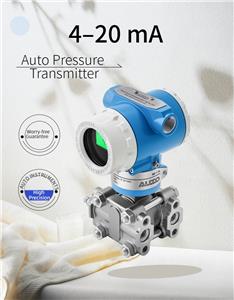
As a core field instrument communication method, the 4–20 mA signal is widely used in pressure transmitter products to ensure stable and accurate data output even in harsh environments. It supports long-distance transmission, strong anti-interference, and convenient wiring, fully meeting the requirements of industrial sites such as pipelines, boilers, chemical plants, and power systems.
Although digital communication continues to develop, the 4–20 mA analog current loop will remain irreplaceable in scenarios that prioritize safety and stability. It will continue to serve as a fundamental signal solution for pressure transmitters and industrial instruments worldwide, supporting the stable and reliable operation of process control systems.