


Why do veteran engineers all recommend using remote pressure transmitters? A comprehensive guide to application scenarios and installation essentials
2026-01-19 14:40Why do veteran engineers all recommend using remote pressure transmitters? A comprehensive guide to application scenarios and installation essentials
In industrial measurement sites, especially in complex working conditions, veteran engineers can always accurately determine the equipment selection direction. Among them, the high recommendation rate of remote gauge pressure transmitter has long been a consensus in the industry. The core reason lies in its ability to overcome the harsh working conditions that ordinary transmitters struggle with, while ensuring measurement accuracy and long-term stability. Below, we will systematically analyze the application scenarios and key installation points of remote capacitance type pressure transmitter, and also detail the more outstanding single-crystal silicon differential pressure transmitter, providing references for on-site selection and maintenance.
I. Precise Matching of Complex Working Conditions: A Comprehensive Analysis of the Application Scenarios of Remote smart pressure transmitter
The core advantage of remote pressure transmitter HART is the "non-contact" measurement achieved through the design of isolation diaphragms and capillary tubes, which avoids damage to the core components of the instrument by harsh media. Its typical application scenarios include the following six categories:
Viscous media at high temperatures: such as high-temperature molten resins, viscous crude oil, etc. Ordinary transmitters are prone to clogging of the pressure tapping port due to the viscosity of the medium, and high temperatures can directly damage the sensing unit; the remote design can lead the pressure through the capillary tube, keeping the transmitter body away from the high-temperature area, and simultaneously isolating the viscous medium.
Media prone to crystallization: like caustic soda solutions, sugar syrup, etc., which are prone to crystallization in the pressure tapping channel, causing measurement interruption; the isolation diaphragm of the remote EX pressure transmitter can prevent the medium from directly contacting the pressure tapping port, fundamentally solving the problem of crystallization and clogging.
Settling media containing solid particles or suspended matter: such as mine slurry, paper pulp, mixed liquid in sewage aeration tanks, etc. Solid particles can easily settle and clog the pressure tapping pipeline, and even wear the sensing diaphragm; the remote design can use flange-type isolation devices to meet the measurement requirements of such high-impurity media.
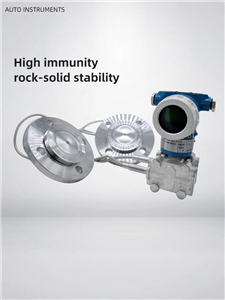
Strongly corrosive or highly toxic media: Such as strong acids, strong alkalis, highly toxic chemical raw materials, etc. These media can directly corrode the metal parts of ordinary transmitters and pose a leakage risk. Remote pressure transmitters can be equipped with special materials (such as Hastelloy, PTFE) isolation diaphragms to achieve safe isolation measurement and ensure on-site operation and maintenance safety.
Continuous and precise measurement of interfaces and densities: In equipment such as storage tanks and reactors, when it is necessary to continuously monitor the interface between two media (such as oil-water interface) or the density of the medium, remote pressure transmitters can be installed with dual flanges to accurately capture the pressure difference and achieve continuous measurement of interface height or density.
Environments with high hygiene and cleanliness requirements: Such as material tanks and fermentation tanks in the food processing and pharmaceutical industries, where measurement equipment must have no hygiene dead corners and be easy to clean. The sanitary flange design of remote pressure transmitters (such as quick-release clamp type) can meet GMP and other hygiene standards and prevent material residue contamination.
II. Key Installation Points: Ensuring the Precise and Stable Operation of Remote Pressure Transmitters
The measurement accuracy and long-term stability of remote pressure transmitters not only depend on the product's own performance but are also closely related to the installation method. Key points to focus on include: The length of the capillary tube is a core influencing factor - the response time is directly proportional to the capillary tube length, and the volume of the liquid filled in the tube also increases with the length, causing the impact of temperature changes on the output to intensify simultaneously. Therefore, the capillary tube should be as short as possible. On this basis, the following installation points must be strictly followed:
The body of the remote pressure transmitter should be installed at the same level as or slightly lower than the remote device (isolation diaphragm) to facilitate the return of the liquid in the tube and avoid zero drift caused by liquid level differences.
The body of the remote differential pressure transmitter should be installed at the midpoint or slightly below the midpoint of the two remote devices. At the same time, note that the low-pressure side remote device should be installed above and the high-pressure side remote device should be installed below the container to ensure the accuracy of the differential pressure measurement. Regardless of the installation position of the transmitter body, zero point migration (positive or negative migration) is required to offset the system errors caused by the height difference and the weight of the filling liquid, ensuring the accuracy of the measurement reference. Avoid direct sunlight on the capillary tube and remote devices to prevent the filling liquid in the tube from expanding or contracting due to sudden temperature changes, which may affect the measurement accuracy. At the same time, avoid direct exposure of the isolation diaphragm to extreme high or low temperatures. For remote pressure transmitters with a range of ≤ 3 kPa, only flat (PFW) isolation diaphragms can be used, and the capillary tube length should not exceed 1.5 m. During commissioning, ensure that the range setting is greater than 3.68 kPa to avoid amplification of measurement errors at small ranges. To eliminate the influence of environmental temperature fluctuations, it is recommended to insulate the capillary tube and remote devices, especially in outdoor, high and low temperature workshops and other scenarios with significant temperature changes. Insulation can significantly improve measurement stability.