


What Are the Causes and Solutions of Negative Pressure in Pipeline Systems?
2026-04-23 10:55What Are the Causes and Solutions of Negative Pressure in Pipeline Systems?
Negative pressure in pipelines refers to a condition where the internal pressure of the pipeline is lower than the external atmospheric pressure. It is a common engineering problem that exists widely in water supply, drainage, chemical processing, oil and gas transportation, and thermal systems. Although negative pressure seems subtle at the early stage, long-term or sudden low-pressure conditions can bring serious hidden dangers to the entire pipeline network. Many industrial accidents and equipment failures are caused by unmonitored and uncontrolled negative pressure. Therefore, understanding the formation mechanism of negative pressure and taking scientific prevention and control measures have become key links in ensuring the safety, stability and long service life of pipeline systems.
In actual industrial operation, negative pressure will lead to a variety of adverse consequences, which directly affect the reliability of the whole system. Sustained low pressure may cause pipeline collapse or permanent deformation, especially for thin walled pipelines and non metal pipelines. Excessive suction will also damage pumps, control valves, flow meters and other supporting equipment, increasing maintenance costs and downtime. In addition, negative pressure is easy to inhale air, impurities or even toxic gases into the pipeline system, resulting in medium pollution, blockage and increased risk of leakage. Long term negative pressure fluctuations will accelerate material fatigue, shorten the service life of pipelines and accessories, and greatly increase the probability of sudden failure.
Negative pressure occurs most frequently in liquid conveying pipelines, such as water supply networks, sewage treatment systems, chemical process pipelines and high temperature heat transfer oil systems. The main causes can be summarized into four typical categories.
The first common cause is excessive pump suction. If the selected pump model is too large, the speed is too high, or the operating parameters do not match the actual working conditions, the suction capacity of the pump will exceed the liquid supply capacity of the front end system, resulting in a rapid pressure drop at the pump inlet. In addition, when the suction side is blocked, the filter is dirty, or the valve opening is insufficient, the liquid inflow will be greatly restricted. Even if the pump runs normally, it will form a local vacuum state and trigger obvious negative pressure.
The second major factor is water column separation and transient pressure shock. When the pump stops suddenly, the liquid in the pipeline still flows forward under inertia, forming a low pressure area near the pump outlet or at the high point of the pipeline. Once the pressure is lower than the saturated vapor pressure of the liquid, a large number of vapor cavities will appear. When the liquid flows back and these cavities collapse instantly, strong water hammer will be generated, resulting in pipeline rupture, flange leakage, instrument damage and other serious consequences. This is one of the most destructive hidden dangers related to negative pressure in the pipeline system.
The third reason is improper venting and drainage operations. When draining or releasing water from high level pipelines, if the air valve is blocked, too small in size or fails to act normally, air cannot enter the pipeline in time, and obvious negative pressure will be formed at the high point. In the siphon system, once air enters the pipeline from the suction port, the siphon effect will be destroyed, and local low pressure will also occur, affecting the stability of the entire system.
The fourth typical cause is thermal contraction of high temperature liquids. In pipelines transporting hot water, heat transfer oil and other high temperature media, when the system is closed and there is no air intake or liquid replenishment measures, the liquid volume will shrink sharply during the cooling process. This shrinkage will directly lead to a rapid drop in internal pressure and even form a vacuum, which may cause pipeline collapse and structural damage in serious cases.
The essential principle of negative pressure is very clear: the volume of fluid flowing out or being pumped away is greater than the volume of fluid entering or being replenished. To avoid the harm of negative pressure, targeted prevention strategies must be adopted in design, installation and daily operation. First, select pumps and fans with appropriate specifications to ensure that the equipment parameters match the system. Second, configure and maintain air valves and vacuum relief valves to ensure that the system has good breathing capacity. Third, use soft start and stop, frequency conversion speed regulation and other devices to restrain transient pressure fluctuations. Fourth, carry out regular inspection and cleaning to keep the pipeline unobstructed and avoid blockage induced negative pressure.
In summary, negative pressure in pipelines is not accidental, but the result of fluid imbalance, transient conditions, unreasonable design and non standard operation. Even small pressure fluctuations may bring major risks to system safety. Stable and reliable pressure monitoring is the core link of early warning and prevention.
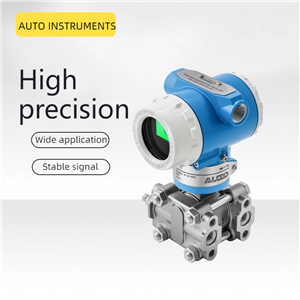
Auto Instrument pressure transmitter supports real time low pressure detection at pump inlets, fan ends, pipeline high points and high temperature media sections. It accurately captures pressure fluctuations caused by water hammer, thermal contraction and height difference, and provides real time data for protection actions. Through continuous and stable monitoring, Auto Instrument pressure transmitter effectively improves pressure monitoring, reduces vacuum risk, and enhances pipeline pressure control, so as to comprehensively improve the safety and stability of industrial pipeline systems.