


AUTO Instrument Popular Science:4 Instrument Sealing Methods | Differences & On‑site Application
2026-09-14 10:35AUTO Instrument Popular Science:4 Instrument Sealing Methods | Differences & On‑site Application
Introduction
AUTO Instrument addresses high‑frequency leakage problems occurring on industrial instrument sites. It conducts in‑depth analysis on the core differences among four mainstream sealing structures: tapered thread, flange, ferrule fitting and cable gland. Combined with real‑world working conditions including instrument air pipelines, impulse tubes, root valves and cable ports, this article sorts out standardized selection and construction specifications. It fundamentally solves on‑site issues such as instrument leakage, signal abnormality and equipment failure of pressure transmitter, HART pressure transmitter, 4‑20mA pressure transmitter, differential pressure level transmitter and online density meter.
I. Industry Fact: Instrument Leakage Is Mostly Caused by Wrong Selection Rather Than Improper Installation
During the operation and maintenance of industrial instruments, most leakage failures of pipelines, joints and cable ports are not caused by insufficient tightening force, but by incorrect sealing method selection in the early‑stage design. Whether it is ordinary pressure transmitter, HART pressure transmitter, 4‑20mA pressure transmitter, differential pressure level transmitter for tank measurement, or online density meter for process application, different instrument points adopt different sealing logics. Tapered thread realizes sealing through thread engagement; flange adopts gasket end‑face sealing; ferrule fitting achieves sealing by metal biting into tubing; cable gland completes sealing via rubber compression.
When the working medium, working pressure or operating temperature changes, the matching sealing structure should be adjusted accordingly. Do not blindly tighten joints in on‑site maintenance. Instead, confirm the sealing principle of the position first, so as to completely eliminate leakage risks and ensure long‑term stable operation of instruments.
II. Core Highlights: Principles and Differences of Four Instrument Sealing Methods
1. Tapered Thread Sealing (Thread Interference Sealing)
It commonly adopts NPT and PT tapered pipe thread structures. Interference fit is formed during thread screwing. PTFE tape, sealant or sealing grease are applied to fill thread gaps so as to realize all‑round sealing. It is widely used for process interfaces of pressure gauges, pressure switches, pressure transmitter, HART pressure transmitter and 4‑20mA pressure transmitter.
Structure distinction: Tapered thread can achieve independent thread sealing; parallel thread has no sealing capacity and must be used together with end‑face gaskets or O‑rings. Mixed usage is prohibited.
2. Flange Sealing (End‑face Gasket Sealing)
Flanges, union joints, adapters and instrument manifolds adopt end‑face sealing structures. Two sealing faces clamp the gasket, which deforms under compression to fill micro gaps for sealing. Many process connections of differential pressure level transmitter are of flange type.

Sealing stability depends on two key factors. First, flange sealing faces shall be free of scratches, corrosion and residual dirt. Second, gasket material shall match actual working conditions. Even if a brand‑new gasket is installed, leakage may still occur if the sealing face is damaged or the gasket is improperly selected.
3. Ferrule Fitting Sealing (Metal Bite Sealing)
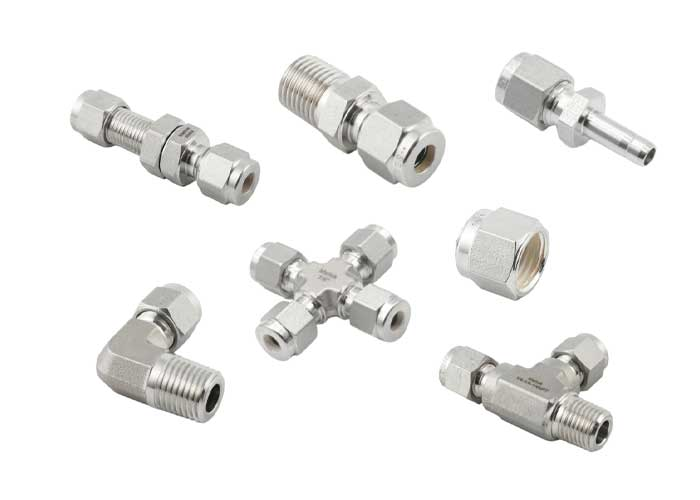
It is designed for small‑bore instrument impulse tubes of Φ6, Φ8, Φ10 and Φ12, adopting double‑ferrule structure. The cutting edge of ferrule bites into the outer wall of tubing to form rigid metal sealing, and locks the pipeline for vibration resistance and anti‑disengagement. This structure is widely applied in impulse tubes of pressure transmitter, HART pressure transmitter, 4‑20mA pressure transmitter, differential pressure level transmitter and online density meter.
Common industry misunderstanding: The nut thread of ferrule fitting only provides driving force for compression rather than sealing. The real sealing position is the contact surface between ferrule and tubing outer wall.
4. Cable Gland Sealing (Compression Elastic Sealing)
It is applied to instrument cable entry points. Rubber sealing rings and sealing putty are compressed to grip cable sheath, realizing waterproof, dust‑proof, moisture‑proof and isolation sealing. It fits indoor and outdoor installation scenarios of pressure transmitter, HART pressure transmitter, 4‑20mA pressure transmitter, differential pressure level transmitter and online density meter.
Three criteria for qualified sealing: The specification of cable gland shall precisely match cable outer diameter; the compression nut shall be fastened properly; unused spare ports shall be fully blocked. It effectively prevents instrument water ingress, terminal corrosion and signal fluctuation.
III. Scenario Value: Standardized Sealing Construction Schemes for Various Working Conditions
1. Sealing Scheme for Instrument Air Pipeline (0.4‑0.8MPa Dry Compressed Air)
The instrument air system has numerous joints and bears long‑term equipment vibration. Sealing failure will easily cause unstable air source pressure, resulting in valve sticking and response drift, which indirectly affects the measurement accuracy of pressure transmitter, HART pressure transmitter, 4‑20mA pressure transmitter and differential pressure level transmitter.
Large‑diameter main pipeline (DN25‑DN100): Adopt union end‑face sealing with copper gasket or PTFE gasket. Replace gaskets with new ones after disassembly. Inspect and remove scratches and corrosion on sealing faces to avoid leakage caused by rework.
Branched small‑bore pipeline: Apply double‑ferrule fittings. The front ferrule undertakes sealing function while the rear ferrule undertakes clamping and anti‑vibration function. Ensure smooth tubing end without burrs, insert tubing to the bottom and tighten according to manufacturer’s torque requirements. Directly replace deformed or scratched tubing; repeated reuse is forbidden.
2. Sealing Scheme for Process Impulse Tube (Complex Process Medium)
Impulse tubes are exposed to high‑temperature, high‑pressure, corrosive, viscous and crystallized process media with complicated working conditions. Proper sealing selection is the prerequisite for stable measurement of pressure transmitter, HART pressure transmitter, 4‑20mA pressure transmitter, differential pressure level transmitter and online density meter.
Conventional tapered thread interface: For 1/2NPT interfaces of transmitters and pressure gauges, wrap PTFE tape properly, apply matched sealant and control screwing depth. Adopt special sealing auxiliary materials for high‑temperature, oxygen and other special scenarios.
End‑face sealing interface: PTFE gasket is preferred for medium‑low pressure corrosive working conditions. Control tightening torque to avoid cold‑flow deformation of PTFE gasket. Retighten key connections after temperature and pressure fluctuation. For high‑temperature and high‑pressure working conditions, select annealed copper gaskets, metal spiral wound gaskets or metal ring gaskets strictly according to pressure grades.
3. Inspection Specification for Root Valve Sealing
As the core isolating component for process pressure tapping, the root valve mostly adopts RF flange on process side, equipped with graphite gaskets and composite spiral wound gaskets. It features excellent temperature resistance and compression‑rebound performance for high‑temperature industrial scenarios, and is widely matched with pressure transmitter, HART pressure transmitter, 4‑20mA pressure transmitter and differential pressure level transmitter.
Construction specification: Clean residual dirt on flange faces, place gaskets at the center, fasten bolts in diagonal multi‑pass sequence. Discard graphite gaskets and spiral wound gaskets after disassembly and do not reuse them. Inspect stem packing sealing as well. Properly compress packing gland for minor leakage. Replace packing immediately when sticking, aging, ablation or corrosion occurs.
4. Sealing Specification for Cable Gland
Though low‑cost, cable gland plays a key role in instrument moisture and water resistance, and directly determines the service life of pressure transmitter, HART pressure transmitter, 4‑20mA pressure transmitter, differential pressure level transmitter and online density meter. For outdoor instruments, arrange cable ports downward and install water‑drip loops. Strictly follow three key points: specification matching, proper compression and spare port blocking, so as to fundamentally prevent transmitter water ingress, signal jump and terminal corrosion.
IV. Supplementary Summary: Standard On‑site Inspection Process for Instrument Sealing
1. Check medium: Select matched sealing structures and sealing materials according to instrument air, steam, corrosive media and viscous media;
2. Check structure: Inspect thread sealing for tapered thread, end‑face gaskets for flanges, ferrule biting for small‑bore tubing, and compression sealing for cable entries;
3. Check material: Distinguish applicable scenarios of PTFE, copper, graphite, rubber and spiral wound gaskets. Avoid universal mixed use;
4. Check construction: Standardize PTFE tape wrapping, ferrule fitting installation, bolt tightening and cable gland compression details, so as to guarantee long‑term operation stability of pressure transmitter, differential pressure level transmitter, online density meter, HART pressure transmitter, 4‑20mA pressure transmitter and other industrial instruments.
Excellent instrument sealing effect relies on accurate type‑selection and standardized construction. AUTO Instrument devotes itself to R&D and manufacturing of industrial instruments and supplies pressure transmitter, HART pressure transmitter, 4‑20mA pressure transmitter, differential pressure level transmitter and online density meter. With professional structural design and rich on‑site adaptation experience, AUTO Instrument provides stable, leakage‑proof and durable complete instrument sealing solutions for industrial projects.