



Essential for Industrial Control Debugging: How Engineers Can Quickly Distinguish Dry Contacts from Wet Contacts
2026-06-26 09:52Essential for Industrial Control Debugging: How Engineers Can Quickly Distinguish Dry Contacts from Wet Contacts
Introduction
In industrial control applications such as PLC control, instrument interlocking, fire alarm systems, and building automation, common issues frequently arise during commissioning—such as sensors triggering with no feedback, relays energizing but equipment failing to start, system false alarms, or input modules burning out. Most of these problems are not due to equipment failure, but rather stem from technicians confusing the wiring logic between dry and wet contacts. This article, based on real-world operational scenarios, explains the fundamental differences between these two types of contacts, common misconceptions, identification methods, and appropriate application contexts, helping engineers quickly diagnose faults and standardize wiring practices.
I. Common On-site Faults: 90% Wiring Issues Stem from Terminal Confusion
In industrial control environments, various hidden wiring faults frequently occur: sensor indicator lights illuminate normally, yet the PLC input point shows no response; relay coils energize properly, but downstream controlled equipment fails to operate; alarm hosts trigger frequent false alarms after commissioning; in severe cases, PLC input modules or alarm input boards may be directly burned out.
Most technicians hold a common misconception: they assume that a closed two-wire signal means "on" and an open connection means "off," applying a uniform wiring logic across all scenarios. In reality, industrial control signals fall into two distinct categories—dry contacts (passive) and wet contacts (active)—which differ fundamentally in wiring methods, power supply logic, and compatible equipment. Incorrect connections do not immediately cause errors, but can lead to signal failure, system false alarms, module burnout, and other latent issues—making this one of the most overlooked yet critical fundamentals in industrial control commissioning.
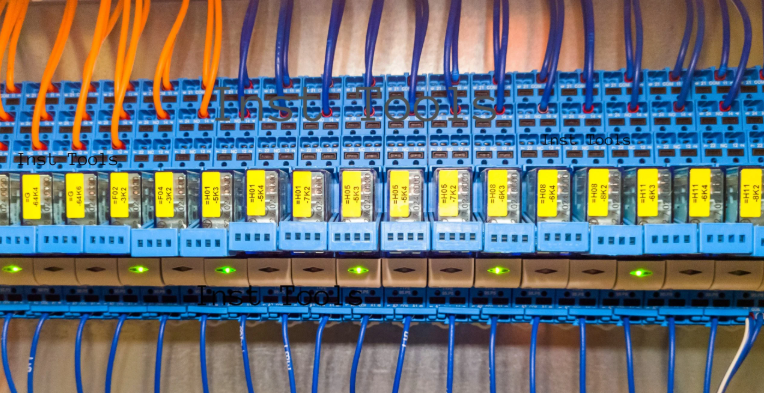
II. Core Misconception Analysis: Fundamental Differences Between Dry and Wet Contacts
The key distinction between dry and wet contacts lies in whether they carry their own power supply voltage:
Dry Contact (Passive Contact): No voltage or power source; functions solely as a circuit switch, similar to a standard mechanical switch. It does not generate any electrical signal on its own and requires an external power source to complete the circuit for the receiving device to detect the signal.
Wet Contact (Active Contact): Supplies its own rated output voltage. When activated, it actively outputs 12V/24V DC, eliminating the need for an external detection power source and directly providing a valid signal to the receiving end.
Critical field errors include: connecting a wet contact voltage signal to a receiver expecting a passive dry contact, which often results in module breakdown due to overvoltage; conversely, connecting only a passive contact to a receiver requiring a voltage signal will result in no detectable signal due to lack of loop voltage.
III. Typical Fault Scenarios and Root Cause Analysis
Relay Engages, But PLC Receives No Input Feedback
Relay coil energization indicates only that the control circuit is functioning normally—it does not guarantee that the output contact will trigger a signal at the PLC. Most relays provide passive dry contacts, which merely close a circuit but cannot autonomously supply 24V for signal detection. If the PLC's common terminal and power loop are not correctly wired, simply connecting the relay contact will fail to form a valid input circuit, resulting in equipment operation without PLC signal recognition. This issue commonly arises during equipment upgrades or secondary wiring in control panels equipped with differential pressure level transmitter, 4-20mA pressure transmitter and online density meter.
Sensor Light On, Yet PLC Input Anomalies
Proximity switches, photoelectric sensors, gauge pressure transmitter, and similar devices typically use PNP/NPN transistor active outputs (wet contacts). A lit sensor indicator light only confirms target detection, not necessarily compatibility with the PLC’s input type. Mismatched configurations—such as incompatible sensor output types, PLC input modes, or incorrect common (COM) terminal connections—can lead to symptoms like input points failing to light up, remaining constantly on, logical inversion, or signal jitter. Diagnosis should focus on three core factors: output type, power supply method, and terminal wiring, especially when matching HART pressure transmitter and liquid density meter with automation systems.
Frequent False Alarms in Security and Fire Systems
Door magnetic switches, level switches, and equipment status/fault feedback devices usually employ passive dry contacts, designed to interface with passive input ports on alarm hosts or building automation systems paired with remote seal level transmitter and chemical density meter. If active wet contact voltage signals are mistakenly connected instead, minor consequences include persistent false alarms; severe cases may directly damage the input circuit board, causing irreversible equipment failure.
IV. Engineer’s Practical Guide: Quickly Distinguishing Dry vs. Wet Contacts
Refer to Drawings and Manuals (Preferred, Most Accurate Method)
Labels such as “passive contact,” “relay output,” “normally open/closed,” or “potential-free contact” indicate dry contacts.
Labels indicating “active output,” “24V DC output,” “PNP/NPN output,” or “transistor output” refer to wet contacts, widely used in industrial pressure transmitter, tank level pressure transmitter and slurry density meter.
Use a Multimeter for On-Site Testing (Emergency Method Without Documentation)
Power off and disconnect all external wiring. Use a multimeter in continuity or resistance mode to test the contact: if the contact only changes state (open/close) upon activation and does not produce any self-generated voltage, it is a dry contact. Under normal power supply conditions, a rated voltage of 12V/24V can be measured between the output terminal and the common terminal. The voltage changes synchronously during operation, indicating a wet contact, which is the standard signal form of smart pressure transmitter and flange level transmitter.
Note: Measured voltage on live circuits should not be used as the sole criterion, as external voltages introduced into the circuit may lead to misjudgment. The core criterion for determination is whether the device independently outputs voltage.
V. Application Scenarios: Correct Usage of Dry Contacts and Wet Contacts
Dry Contact Applications
Suitable for scenarios requiring electrical isolation, where the receiving end voltage is not fixed and only the on/off state needs to be determined. Common devices include relay contacts, push buttons, limit switches, and equipment fault/operation feedback contacts matched with pressure transmitter manufacturer supplied instruments. Advantages include strong isolation, high compatibility, and flexible wiring. However, an external detection power source must be connected to form a complete circuit for proper operation.
Wet Contact Applications
Applicable when the receiving end requires voltage input and sensors have built-in standard signal outputs. Typical devices include PNP/NPN proximity switches, photoelectric switches, and active digital output from intelligent instruments such as steam pressure transmitter, diaphragm level transmitter and digital density meter. Wiring must strictly match voltage levels, AC/DC types, positive/negative terminals, and common ground connections to prevent faults caused by mismatched specifications.
VI. Conclusion
Dry contacts are passive switches that merely open or close circuits without providing power; wet contacts are active signals with voltage and output capability. As fundamental knowledge in industrial automation, understanding their wiring logic applies universally to PLCs, instruments, fire protection systems, and building automation systems equipped with full sets of pressure transmitter, differential pressure level transmitter and online liquid density meter. During field commissioning and troubleshooting, instead of blindly replacing modules or sensors, first verify contact type, signal characteristics, and common terminal connections. This approach resolves most hidden signal faults efficiently, significantly improves debugging speed, reduces equipment damage risks, and ensures stable operation of industrial control systems.